Start your path at STC
Admissions & Registration guides new students through the admissions process, verifies documentation, and makes sure every student’s entry into the center goes smoothly.
STC is a concept and pilot program that is not open yet. Applying now adds you to the interest list.
Questions: jaylen@stc-academy.org
Apply like you would to college
For now, an application puts you on the interest list. These are the steps once STC opens.
Apply online
Nine short steps: profile, program choice, education, experience, a personal statement, two references, documents and agreements. It saves as you go.
Review
Admissions & Registration verifies identity, transcripts and prerequisite requirements, then the program committee scores your file.
Interview
Some applicants are invited to an interview in the Admissions & Registration office or by video.
Decision
Accepted, waitlisted or not admitted. Accepted students get an acceptance letter and accept their offer online.
Enroll
Finish the checklist: deposit, orientation date, required forms, Code of Conduct, uniform sizes and a badge photo.
Get your student account
The office creates your @stc-academy.edu email, student ID and color-coded badge, and you log in to the Student portal.
Tip: check from the same device and browser you applied on.
Find us in the lobby
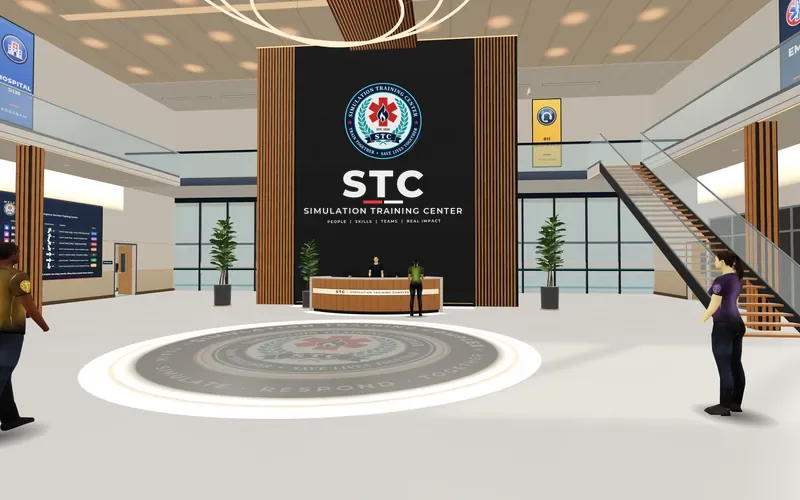
Admissions & Registration is responsible for guiding new students through the admissions process, verifying documentation, and ensuring smooth entry into the Simulation Training Center.
In the office
- Dedicated desks for enrollment specialists.
- Secure storage for student applications and records.
- Computer terminals for online enrollment and financial aid processing.
Office details
Email: jaylen@stc-academy.org
Location: Main Lobby, Level 1, beside the Front Office
Professional from day one
Every student follows the twelve-point Code of Conduct and their program’s professional code.
Dress code
- Standardized uniforms for trainees with ID badges.
- Professional attire for instructors.
- Safety gear required in simulation wings.
- No casual clothing during training.
Evaluation system
- Regular skill assessments.
- Professionalism and ethics included in grading.
- Feedback sessions after each simulation.
- Certification tied to both skill and conduct.
Leadership development
- Decision-making drills under pressure.
- Accountability training.
- Respect for chain of command.
- Opportunities for trainees to lead small teams.
Communication training
- Radio communication drills under stress.
- Patient update simulations.
- Command briefing practice.
- Clear, concise language emphasized.
Support built into the building
Training is intense on purpose. STC builds in places and people to help students recover, prepare and grow.
Mentorship Programs
- Ongoing guidance beyond simulations.
- Builds confidence and career growth.
- Encourages long-term development.
Mental Health Support
- Mindfulness and resilience training included.
- Prevents burnout and trauma.
- Promotes sustainable careers.
Career Pathways
- Clear progression from student → professional.
- Tracks readiness for EMT-B, paramedic, or nursing roles.
- Aligns simulation with real career goals.
Testing Center
A proctored testing room on Level 3 for practice and certification exams, with study space in the Library & Study area on the same floor.
Wellness Room
A quiet, calm room on Level 1 for students to rest, reset, and prepare before or after testing.
Stress Recovery
- The Wellness Room and Counselor’s Office for rest and support after high-intensity drills.
- Breathing and mindfulness exercises.
- Designed to prevent burnout and build resilience.
Financial assistance
Financial aid, scholarships, payment plans, and gear and transportation help are handled with the Financial & Student Support forms (FS-1301 to FS-1308).
Counseling support
Students can ask for confidential support with the Counseling Support Request (SL-1002).