Dispatch onlineApply
Concept preview. Sample data shown.
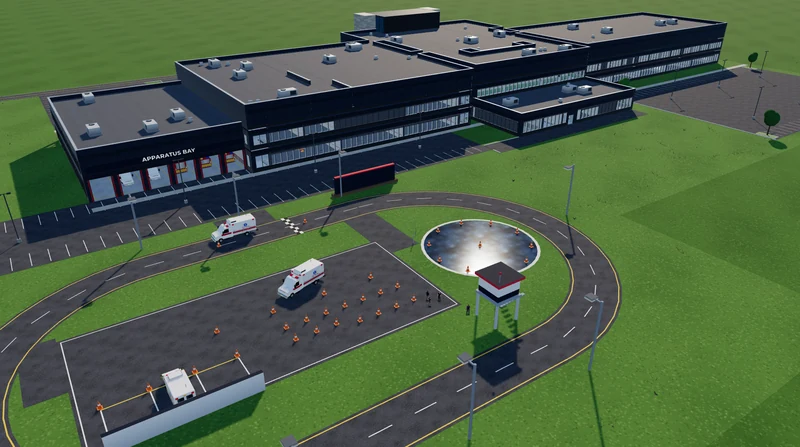
3D render of the STC EVOC driving course with emergency vehicles
Optional add-on · Emergency Vehicle Operator Course

EVOC Course

Learn to drive fast. Safely.

Ambulance, fire truck and rescue vehicle training on obstacle, pursuit and highway courses, with a written exam, a practical driving test and a stress simulation.

Path
Written exam → Driving test → Stress sim
Format
Classroom + driving courses
Badge
EVOC access on EMS and Fire/Rescue badges

A driving course for EMS and Fire & Rescue students.

Overview

What it is

The EVOC Course trains emergency vehicle operators on three purpose-built courses: an obstacle course, a pursuit course and a highway simulation.

EVOC is available to EMS and Fire & Rescue students. It's a course you take inside your program, not a separate program. Your application asks “Do you want to take EVOC?” Yes or No, and once you sign in it shows up as one of your classes.

What you’ll learn

Skills & topics

Pulled from the classrooms, labs and scenario files in the Emergency Vehicle Operations Course plan.

  • Ambulance handlingWeight distribution, longer stopping distances and tight hospital entry points.
  • Fire truck operationsWide turns, ladder truck positioning and water tanker handling on varied terrain.
  • Rescue vehicle maneuversOff-road driving for disaster zones, rapid deployment and convoy coordination.
  • Collision avoidanceDefensive driving, hazard recognition and multi-vehicle pileup simulation.
  • Emergency brakingSudden stops at varying speeds, ABS familiarization, wet and dry surfaces.
  • Safe speeds & sirensMaximum training speeds per vehicle type and safe siren use, monitored electronically.
  • Urban drivingCones, barriers, tight lanes, backing into hospital bays, sudden obstacles.
  • Highway drivingLane discipline, merging under siren, emergency lane changes, fatigue management.
Labs & facilities

Where you’ll train

Every course below runs on the EVOC Course outside the building. See the full wing tour.

Track design

Highway Simulation

  • Lane discipline and merging under siren use.
  • Long-distance driving with emphasis on fatigue management.
  • Emergency lane changes at highway speeds.
Obstacle Course

  • Cones, barriers, and tight lanes to simulate urban driving.
  • Backing-in maneuvers into hospital bays.
  • Sudden pedestrian and vehicle obstacles introduced during drills.

Pursuit Course

  • Sharp turns and controlled skids to simulate evasive maneuvers.
  • Focus on maintaining vehicle control at higher speeds.
  • Timed runs to measure precision under pressure.

Vehicle training

Ambulance Handling

  • Training on weight distribution and longer stopping distances.
  • Maneuvers for tight hospital entry points.
  • Highway merging with patient safety in mind.

Fire Truck Operations

  • Wide-turn training for large vehicles.
  • Ladder truck positioning in tight urban spaces.
  • Water tanker handling on varied terrain.

Rescue Vehicle Maneuvers

  • Off-road driving for disaster zones.
  • Rapid deployment drills.
  • Coordination with other emergency vehicles in convoy.

Safety protocols

Collision Avoidance

  • Defensive driving techniques.
  • Hazard recognition training.
  • Simulation of multi-vehicle pileups.

Emergency Braking

  • Sudden stop drills at varying speeds.
  • ABS familiarization.
  • Wet and dry surface braking practice.

Speed Limits

  • Maximum training speeds set for each vehicle type.
  • Emphasis on safe siren use.
  • Speed monitored electronically during drills.
Certification path

Written exam → Driving test → Stress sim

EVOC is evaluated three ways.

  1. Written Exam

    Covers EVOC laws, safety protocols, and vehicle mechanics.

    Focus: Multiple-choice and scenario-based questions.

  2. Driving Test

    Practical exam on pursuit, obstacle, and highway courses.

    Focus: Graded on precision, safety, and communication.

  3. Stress Simulation

    Timed driving scenarios with simulated patient emergencies. Radio communication required during maneuvers.

    Focus: Evaluated on calmness, clarity, and control under pressure.

The written exam is taken in the Testing Center on Level 3, with study space in the Library & Study area on the same floor.

A typical sim day

What a day looks like

A typical day, built from the rooms and scenarios on campus.

  1. Morning
    Pre-drive briefingSafety protocols and maximum training speeds for the day’s vehicle type.
  2. Late morning
    Obstacle courseCones, barriers and tight lanes; backing into a hospital bay.
  3. Midday
    Braking drillsSudden stops at varying speeds on wet and dry surfaces.
  4. Afternoon
    Pursuit or highway courseControlled skids and timed runs, or merging under siren.
  5. End of day
    Stress runA timed drive with a simulated patient emergency and radio calls.
Career paths

Where it can take you

EVOC supports the EMS and Fire & Rescue career paths.

Ambulance operator

EMS agencies

Fire apparatus driver / operator

Fire departments

Rescue vehicle operator

Rescue squads and disaster teams

Required for EMS and fire roles

Most agencies require EVOC before driving a unit

Requirements

Before you apply

  • Enrolled in EMS or Fire & Rescue: say yes to EVOC on your application
  • Valid driver’s license and a clean driving record
  • Strict safety protocols when accessing EVOC areas
  • Badge carried at all times

Admissions & Registration verifies identity, transcripts, and prerequisite requirements.

Taking EVOC?

The application takes about 10 minutes and saves as you go. Choose your program. The EVOC question will already say Yes for you.

EVOC is available to EMS and Fire & Rescue students