Dispatch onlineApply
Concept preview. Sample data shown.
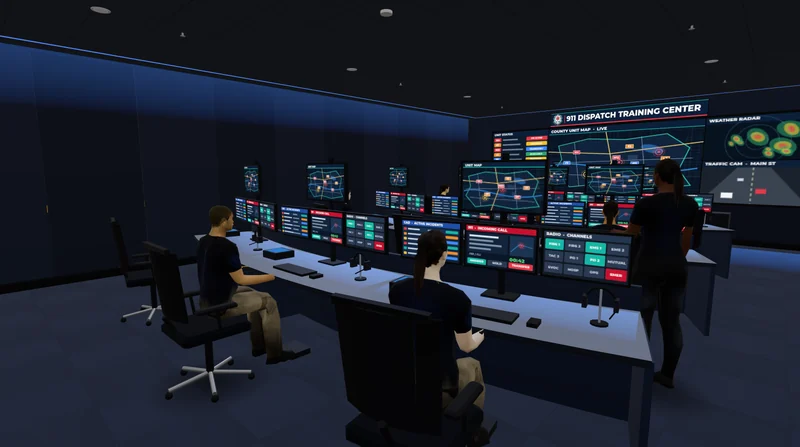
3D render of the STC 911 Dispatch Training Center with dispatch consoles and a video wall
Emergency Communications · 911 Telecommunicator

911 Dispatch

The first voice on every call.

Answer the call, find the caller, send the right help and talk the caller through it until units arrive. Call-taking, CAD, radio and emergency dispatch protocols, practiced live in the 911 Sim and the 911 Dispatch Center.

Path
Call-taking → CAD & radio → Protocols → Full calls
Format
Classroom + live sim
Badge
Dispatch badge

Every full-call scenario starts with dispatch.

Overview

What it is

The 911 Dispatch program trains emergency telecommunicators: the people who answer the call, work out where help is needed and what happened, send the right units and stay on the line with the caller until help arrives.

Students learn on the same tools the rest of the campus trains with. They take calls and dispatch on the live map in the 911 Sim, run radio traffic from the consoles in the 911 Dispatch Center, and work every full-call scenario alongside fire, EMS and nursing, then join the team debrief.

What you’ll learn

Skills & topics

Everything a 911 telecommunicator does on a call, from the first ring to the moment units clear the scene.

  • Call-takingAnswering with control, the first questions, and keeping a panicked caller talking.
  • Finding the callerConfirming the address, working from landmarks and cross streets, and handling callers who can’t say where they are.
  • CAD & the live mapCreating the incident, choosing the closest right units and tracking them on the map in the 911 Sim.
  • Radio operationsClear, short radio traffic, unit status, channel discipline and message accuracy.
  • Emergency medical dispatch (EMD)Structured medical questions, sending the right level of response and pre-arrival instructions.
  • Fire & police dispatch (EFD / EPD)Structure fires, smoke and alarms, crashes and calls where scene safety comes first.
  • Pre-arrival instructionsCoaching CPR, bleeding control and childbirth over the phone until help is on scene.
  • Stress & teamworkCalm under pressure, handling difficult callers and supporting each other after hard calls.
Labs & facilities

Where you’ll train

Dispatch students train in their own wing: classrooms on Level 1 and a working 911 Dispatch Center on Level 2. See the 911 Dispatch Wing.

911 Dispatch Center · Level 2

911 Dispatch Center

A working dispatch floor where students take simulated 911 calls.

  • Consoles with phone, CAD and radio at every seat.
  • Wall screens with the live call map.

CAD Lab

Computer-aided dispatch practice.

  • Call entry, unit status and incident tracking.
  • Address and map lookups.

Radio Comms Lab

Radio protocol practice with EMS and fire crews.

  • Simulated dispatch channels.
  • Unit status, scene updates and hospital reports.

Dispatch Scenario Control

Instructors run the calls and the surprises.

  • Caller role-play and scenario triggers.
  • Recorded calls for review.

Classrooms & Support · Level 1

Dispatch Classroom

Telecommunicator coursework.

  • Call types, protocols and legal duties.
  • Practice scripts before the dispatch floor.

Call-Taking Classroom

Call-taking practice at classroom stations.

  • Calm questioning and caller control.
  • Pre-arrival instructions like CPR coaching.

Headset & Gear Lockers

Lockers for each student's headset and gear.

  • Personal headsets kept clean and ready.
  • Right by the wing entry.

Dispatch Instructor Office

Workspace for dispatch instructors.

  • Course prep and call review.
  • Student check-ins.

Full calls & debrief

Full Call scenarios

One emergency from the 911 call to the patient follow-up, with every program playing its real part.

  • Dispatch takes the call and sends help.
  • Fire and EMS work the scene while dispatch keeps the radio running.
  • The call ends in the Hospital Sim Wing with the nursing team.

911 Sim

The browser-based 911 Dispatch-to-Hospital Sim used across STC.

  • Take the call and dispatch on the live map.
  • Follow the call to scene care, transport and handoff.
  • Run it as the dispatcher in skills sims or full calls.

Joint Debrief Room

After a full call, everyone who worked it sits in one room in the Sim Core and reviews it together.

  • Recorded call playback from first ring to handoff.
  • Each program says what went well and what to improve.
Certification path

Call-taking → CAD & radio → Protocols → Full calls

Each stage adds a skill, practiced first on its own and then on live scenarios.

  1. Call-taking

    Answering, the first questions, confirming location and calming the caller.

    Practice: 911 Sim skills calls.

  2. CAD & radio

    Building the incident in CAD, sending units on the live map and running clear radio traffic.

    Practice: 911 Dispatch Center consoles and Radio Comms Lab.

  3. Dispatch protocols

    Emergency medical, fire and police dispatch protocols, with pre-arrival instructions.

    Practice: Protocol drills in the 911 Sim.

  4. Full calls

    Dispatch runs the call while fire, EMS and nursing work it live, then the whole team debriefs.

    Where: 911 Dispatch Center, EMS scenario rooms and Hospital Sim Wing.

A typical sim day

What a day looks like

A typical day, built from the rooms and scenarios on campus.

  1. Morning
    ClassroomCall-taking, protocols or radio procedure.
  2. Late morning
    911 Sim skills callsHard-to-find addresses, panicked callers and pre-arrival instructions.
  3. Midday
    Radio drillsUnit status and scene updates with the EMS and fire teams.
  4. Afternoon
    Full callTake the call in the 911 Dispatch Center and run it until the patient reaches the hospital wing.
  5. End of day
    Team debriefDispatch, fire, EMS and nursing review the recorded call together.
Career paths

Where it can take you

Roles that 911 Dispatch training prepares students to work toward.

911 telecommunicator

Emergency communications centers

Fire / EMS dispatcher

Fire and EMS dispatch centers

Police dispatcher

Law enforcement communications

Communications training officer

Training new call-takers

Communications supervisor

Leading a dispatch floor

Emergency management

Operations and incident command centers

Requirements

Before you apply

  • Program selection and an Admissions & Registration review of identity, transcripts and prerequisite requirements
  • Clear speaking voice, careful listening and steady typing
  • Background check before working live consoles
  • Confidentiality with caller and patient information
  • Badge carried at all times

Admissions & Registration verifies identity, transcripts, and prerequisite requirements.