Dispatch onlineApply
Concept preview. Sample data shown.
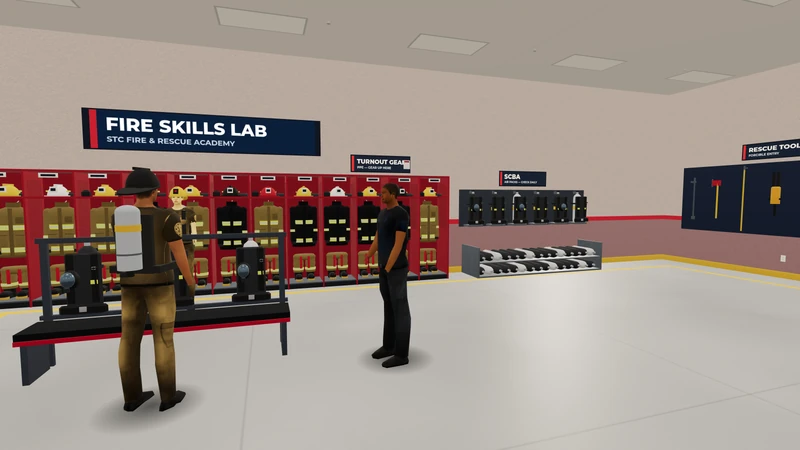
3D render of the STC Fire Skills Lab with turnout gear lockers and SCBA
Fire & Rescue Wing

Fire & Rescue

From fire fundamentals to live fire.

Four classrooms, four skills labs and the Burn Building, from fire fundamentals to live-fire, hazmat and technical rescue.

Path
Fundamentals → Live fire → Hazmat & Rescue
Format
Classroom + live-fire labs
Badge
Fire / Rescue badge

Also trains in the Hospital Sim Wing, a shared training section of the building.

Overview

What it is

The Fire & Rescue program lives in the Fire & Rescue Wing. Students learn fire service basics in the classroom, then put them to work in the Fire Skills Lab, the reinforced Burn Building, the Hazmat Response Lab and the Technical Rescue Lab.

Fire/Rescue students also train in the EVOC Course and the Hospital Sim Wing, and run integrated scenarios and joint exercises with Paramedic students.

What you’ll learn

Skills & topics

Pulled from the classrooms, labs and scenario files in the Fire & Rescue Wing plan.

  • Fire service basicsFire service principles, safety, and introductory firefighting skills.
  • Fire behaviorFire dynamics, combustion, and structural fire behavior, with fire modeling and case studies.
  • Hose & ladder operationsHose handling, ladder operations and PPE use in the Fire Skills Lab.
  • Forcible entry & ventilationDedicated stations for forcible entry and ventilation practice.
  • Live-fire suppressionControlled fire props in a reinforced burn building.
  • Hazardous materialsHazmat response, hazmat suits, decontamination, chemical spill and exposure scenarios.
  • Technical rescueVehicle extrication, confined space rescue and victim management.
  • Search & rescueSmoke, confined space props and modular rooms for search-and-rescue drills.
Labs & facilities

Where you’ll train

Every room below is in the 3D building and on the floor plans. See the full Fire & Rescue wing.

Apparatus & Burn Building · Level 1

EMS / Fire Apparatus Bay

A double-height bay where the engines and ambulances live, shared by fire and EMS.

  • Drive-through bay doors to the outside.
  • Apparatus checks, hose loads and rig familiarization.
Burn Building

A reinforced burn building for live-fire and search training, open through two floors.

  • Fire-rated walls, floors and stairs.
  • Search, rescue and hose advancement in real conditions.

Apparatus Ops Room

A training room beside the bay for pump, ladder and rig operations.

  • Pump panel and tool layouts to practice on.
  • Cot area for patient-loading drills.

Skills Labs · Level 2

Fire Skills Lab

Core firefighting skills, practiced until they are second nature.

  • SCBA donning, hose handling and tool work.
  • Ladder and forcible entry stations.

Fire Scenario Lab

Full fire and rescue scenarios run from start to finish.

  • Smoke, sound and lighting cues.
  • Crew roles, radio traffic and command.

Hazmat Response Lab

Hazardous materials response from size-up to decon.

  • Protective suits, detection meters and containment gear.
  • Spill and leak scenarios.

Technical Rescue Lab

Rope, confined space and extrication rescue.

  • Anchors, rope systems and harnesses.
  • Confined space and vehicle rescue props.

Classrooms · Level 1

Fire Classroom 1

Firefighter fundamentals in the classroom.

  • Fire service basics, tools and safety.
  • Lecture with hands-on gear at the front of the room.

Fire Classroom 2

A second classroom for the firefighter course.

  • Building construction and fire ground tactics.
  • Written review before practical skills.

Fire Behavior Classroom

How fire grows, spreads and is controlled.

  • Fire dynamics, ventilation and flashover signs.
  • Video case reviews.

Hazmat & Rescue Ops Classroom

Classroom work for the hazmat and technical rescue labs.

  • Hazard recognition and response planning.
  • Rescue systems and incident roles.

Gear & Decon · Level 1

Turnout Gear Lockers

Lockers for each student's turnout gear, right off the bay.

  • Open racks so gear dries between uses.
  • Quick access on the way to the apparatus.

SCBA & Gear Room

Where breathing apparatus is checked, filled and stored.

  • SCBA packs and spare cylinders.
  • Inspection bench for daily checks.

Decon & Gear Laundry

Gear cleaning after every burn and hazmat drill.

  • Gear washers and drying racks.
  • Keeps dirty gear out of classrooms.
Certification path

Fundamentals → Live fire → Hazmat & Rescue

Each classroom builds on the last, then the labs put it into practice. Written, practical and certification exams are taken in the Testing Center on Level 3.

  1. Fire Fundamentals

    Provides instruction on basic fire service principles, safety, and introductory firefighting skills.

    Practice: Fire Skills Lab.

  2. Fire Behavior

    Provides instruction on fire dynamics, combustion, and structural fire behavior.

    Practice: Burn Building and Fire Scenario Lab.

  3. Hazmat

    Provides instruction on hazardous materials response and decontamination procedures.

    Practice: Hazmat Response Lab.

  4. Rescue Operations

    Provides instruction on rescue techniques, extrication, and victim management.

    Practice: Technical Rescue Lab.

A typical sim day

What a day looks like

A typical day, built from the rooms and scenarios on campus.

  1. Morning
    ClassroomFire Fundamentals or Fire Behavior lecture with multimedia fire modeling.
  2. Late morning
    Fire Skills LabHose handling, ladder operations, PPE, forcible entry and ventilation stations.
  3. Midday
    Burn BuildingLive-fire suppression with controlled fire props, ventilation and safety monitoring.
  4. Afternoon
    Fire Scenario LabSmoke-filled rooms for search-and-rescue drills.
  5. End of day
    DebriefEMS & Fire Debrief: audio/visual playback of the session and performance review.
Career paths

Where it can take you

His files tie training to certification and advancement, with a clear progression from student to professional.

Firefighter

Municipal and county fire departments

Volunteer firefighter

Community volunteer fire companies

Hazmat technician

Hazardous materials response teams

Technical rescue

Extrication and confined space rescue teams

Fire / EMS dual role

Firefighter/EMT-B and firefighter/paramedic

Fire officer track

Leadership development over time

Requirements

Before you apply

  • Program selection and an Admissions & Registration review of identity, transcripts and prerequisite requirements
  • Minimum age, physical fitness standard and medical clearance
  • Valid driver’s license for EVOC training
  • Strict safety protocols when accessing live-fire and EVOC areas
  • Badge carried at all times

Admissions & Registration verifies identity, transcripts, and prerequisite requirements.